In the era of Industry 4.0, companies face increasingly complex challenges in production management and planning.
Increasing market competitiveness requires advanced solutions to optimize production processes, ensure product quality and meet customer needs. In this context, the use of production- and warehouse-specific ERPs is proving crucial for companies that want to remain competitive and ahead of the curve. This article will explore the role of ERPs 4.0 in production planning and management.
The 4.0 program for efficient production
In the context of Industry 4.0, manufacturing management systems assume a key role in the digital transformation of companies. A 4.0 program synergistically integrates various technologies, such as the Internet of Things (IoT), data analytics, advanced robotics, and artificial intelligence, to create an intelligent and highly efficient factory.
Thanks to such solutions as Portant 4.0, companies can optimize production planning, improve resource management, reduce downtime and ensure high-quality production.
Production planning and contract manufacturing
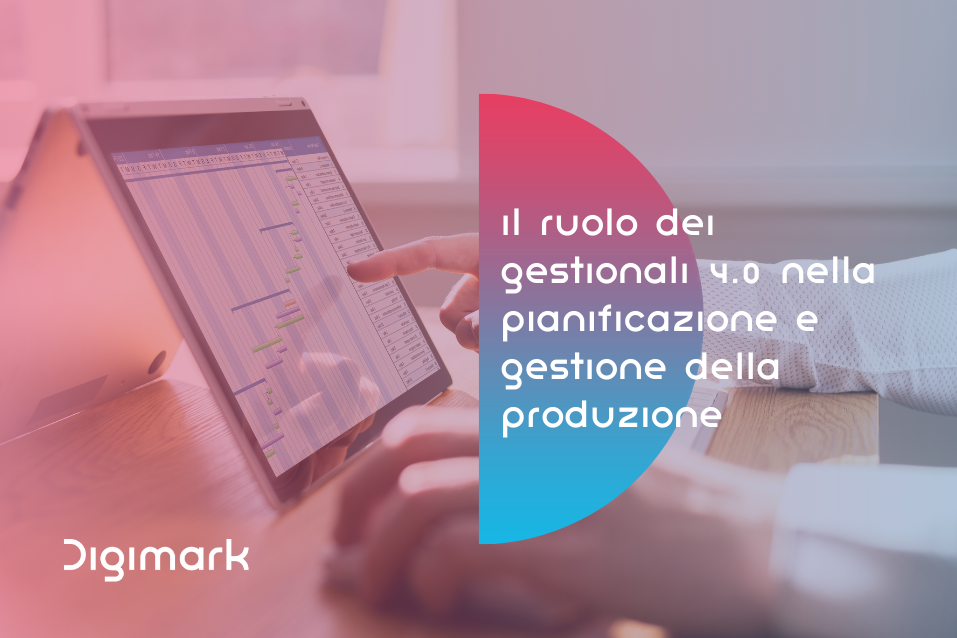
Production planning is a critical step for any manufacturing company. A 4.0 management system offers advanced tools for planning, allowing you to optimize resource utilization, anticipate production times and maximize overall efficiency.
In the case of contract manufacturing, the management system enables integrated coordination of the different stages of the process, from order collection to delivery of the finished product. This makes it possible to reduce errors, monitor the status of orders, and provide timely information to customers on the progression of work.
Learn how Atlanta stretch reduced job order costing errors with Portant 4.0
Job order management and MES software
A job order management software allows you to plan, monitor and control operations in real time, providing a complete overview of current job orders and their costs.
In addition, a Manufacturing Execution System (MES) integrated into the management system allows data to be captured directly from the operational level, enabling accurate tracking and improved production management.
Quality control
Quality control is another crucial activity for food companies.
Warehouse management software allows us to digitally manage quality controls throughout the entire manufacturing process: from raw material acceptance to finished product fulfillment (including quality controls between production stages).
All documents will thus be stored in the company database, and paper forms and records will no longer be necessary.
ERP and MRP: integrated production management
Enterprise Resource Planning (ERP) and Material Requirements Planning (MRP) systems are an essential component of a manufacturing management system.
ERP enables the integration and coordination of all business activities, providing a comprehensive view of processes and information flow. On the other hand, MRP enables accurate planning of material requirements, ensuring efficient inventory management and reducing waste.
Management software 4.0 is an indispensable solution for manufacturing companies. By integrating advanced technologies, such as IoT, data analytics and artificial intelligence, these ERPs offer powerful tools for planning, managing and controlling manufacturing activities.
Whether planning production, managing work orders or monitoring the production process in real time, a 4.0 management system is a key competitive advantage for companies that want to stay abreast of rapid market changes.
Reduce waste with Portant 4.0: software designed to improve efficiency across the enterprise